
The safest way to store cryptocurrency long-term is in a hardware wallet that keeps your private keys offline and away from exchanges. Still, most new holders skip this entirely.
If the exchange gets hacked, goes bankrupt, or freezes withdrawals, your crypto goes with it. Basically, crypto wallet security starts with one thing: controlling your own keys.
At CryptoRoo, we help you understand these decisions before they get costly. This guide covers how crypto wallets work, what types are available, and the safest ways to store your digital assets long-term.
Read on, and we’ll walk you through all of it.
How Crypto Wallets Work
Crypto wallets are digital tools that store the private keys you need to access your digital assets. However, the wallet doesn’t hold your cryptocurrency. Your coins live on the blockchain.

Every wallet has a wallet address and a private key. The address works like a bank account number, so anyone can use it to send you funds (it’s the one part of your wallet you can share openly).
The private key, on the other hand, is what proves ownership and authorizes your transactions. That’s why if you share it with the wrong person, they can drain your wallet.
You use both keys in every transaction: the public key (or wallet address) receives funds, while the private key confirms that you are authorizing the transfer. If you lose the private key, then you may lose access to your crypto assets permanently.
Why Storage Matters
The type of wallet you choose determines how well your digital assets are protected. Keeping your keys on an exchange means giving a third party full control of your funds, and exchanges aren’t immune to hacks or sudden shutdowns.
From what we’ve seen with beginners, most people don’t realize the risk until something goes wrong. When an exchange gets compromised or freezes accounts, your funds become inaccessible, and the exchange is under no obligation to return them.
So, moving your keys to a wallet you control is the first step toward secure cryptocurrency storage. That choice comes down to two types: hot wallets and cold wallets.
Hot Wallets vs. Cold Wallets: Which One Do You Need?
For long-term holding, a cold wallet is the right choice. If you trade regularly and need quick access to your funds, a hot wallet is the more practical option.
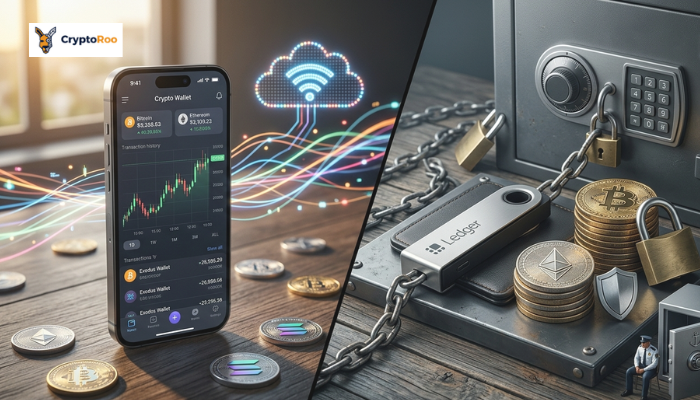
Your setup depends on how active you are as a trader and how much you plan to hold long-term.
Types of Crypto Wallets Explained
Each wallet type stores your private keys differently. The right fit depends on how often you use crypto and how much control you want over your funds.
- Connected Wallets for Daily Use: Software wallets, mobile apps, web wallets, and online wallets all fall under this category. They’re always on and give you quick access to your funds. But that constant internet connection also leaves private keys open to online attacks and malicious software.
- Cold Wallets Keep Keys Offline: Cold wallets store your private keys on physical devices that stay completely offline. Hardware wallets are the most recognized example. Since your keys never touch the internet, hackers have no direct pathway to your funds.
- Custodial and Non-Custodial Options: A custodial wallet is managed by third-party providers like an exchange. The platform holds your private keys on your behalf. Non-custodial wallets flip that arrangement and give you full control. Desktop wallets also fall into this category and are required for decentralized finance and smart contracts.
Most long-term holders combine both, with hot wallets for small amounts and cold storage for the rest.
Hot Wallet vs. Cold Wallet: At a Glance
If you’re still deciding between the two, seeing them side by side makes the choice clearer. The comparison covers security level, cost, key control, and what each wallet works best for.
| Hot Wallet | Cold Wallet | |
| Internet Connection | Always connected | Offline |
| Best For | Daily use, active trading | Long-term holding |
| Security Level | Moderate | High |
| Hacking Risk | Higher | Very low |
| Recovery Method | Platform support | Seed phrase only |
| Key Control | Varies | Always yours |
| Cost | Free | ~$55–$200 |
| Examples | Mobile apps, web wallets, software wallets | Hardware wallets |
Bottom Line: Cold storage remains the stronger choice for long-term holding. For active traders, a combination of both tends to work best.
Crypto Wallet Security: Best Ways to Store Digital Assets Long Term
According to the Chainalysis 2025 Crypto Crime Mid-Year Update, more than $2.17 billion in cryptocurrency was stolen in the first half of 2025 alone. Most of those losses traced back to poor storage decisions rather than any flaw in the blockchain.
If you haven’t moved your holdings off an exchange yet, that puts your funds at greater risk than you might expect. Our research into common storage mistakes shows most of those losses were preventable with proper setup.
The right storage approach combines the right hardware, a sensible allocation, and disciplined key management. Here’s a quick breakdown:
- Hardware Wallets for Cold Storage: A hardware wallet is the most reliable option for long-term holders. Ledger and Trezor are two of the most recognized, each a compact device similar to USB drives that stores your private keys completely offline. Because they never connect to the internet, the risk of crypto wallet hacking and identity theft drops significantly.
- Split Your Holdings Between Both: Keeping 80 to 90 percent in cold storage and the rest in a hot wallet is usually the safest split. The split protects the bulk of your holdings even if one wallet gets compromised.
- Protect Your Seed Phrase Offline: Your seed phrase, also called a secret recovery phrase, is the master key to your cryptocurrency wallet. Store it offline and never save it digitally. For enhanced security, use two-factor authentication, a strong password, and multi-signature wallets. Each adds an extra layer of crypto protection.
These practices apply to any long-term holder, and many rely on multiple wallets to reduce their exposure. The initial setup takes time, but once done, your digital assets stay in secure storage.
Store Your Crypto Safely From Day One
Safe long-term crypto storage comes down to three things: the right wallet, a cold and hot storage split, and a seed phrase stored completely offline. As we mentioned earlier, a hardware wallet with 80 to 90 percent in cold storage covers the bulk of that risk.
Beyond that, the most immediate step is getting your holdings off the exchange. The longer they sit there unprotected, the more unnecessary risk you carry.
Once your storage is sorted, CryptoRoo has guides on picking your first exchange, comparing crypto types, and building your crypto knowledge from the ground up.